Design Diary: Covenant
By Germán P. Millán
Hello! I’m Germán, designer of games like Bitoku and Men Nefer. Covenant will premiere at Essen Spiel 2025, and I’d like to share a few thoughts about the creation of this game. I hope you find them interesting.
La llamada de la montaña
When I finished designing Bitoku, David Esbrí mentioned the idea of starting a new game. I remember that conversation very clearly because David suggested the possibility of acquiring The Lord of the Rings license—something that left me both amazed and intimidated. The world is so vast and full of stories that the possibilities for creating a game seemed endless.
With that potential license in mind, I started developing an adventure game. Players would travel across Middle-earth alongside the events of the War of the Ring, fighting Sauron’s forces while completing missions and meeting iconic characters from the saga. It didn’t take long to have a playable prototype, and we began testing it. The game worked and improved with every session, but I never quite liked it. It felt too similar to other adventure games. That’s when I realized what didn’t fit: the theme.
The idea of “making a Lord of the Rings game” was too broad. I needed a more specific focus—something other than heroes facing enemies and completing quests. After some thought and diving deep into the lore of Middle-earth, I decided to focus on the story of the dwarves and the fall of Khazad-dûm. The moment when the Fellowship enters the Mines of Moria has always fascinated me. That labyrinth of galleries, halls, and pillars once built by the dwarven lords is deeply evocative. And besides, dwarves have always been my favorite race.
In just a few days, I had written the structure for a euro-style game, keeping some ideas from the previous prototype but defining the objectives and actions much more clearly.
Without a doubt, Covenant taught me how important it is to have a clear theme. It helps narrow down ideas, define what you want to happen, and understand what the whole design should revolve around.
The Ring of the Anvil
Game design is a curious craft in many ways, one of them being how easy or hard it can be to make a prototype work. In the case of Covenant, it came together quite quickly, and most of the initial ideas remained in the final version.
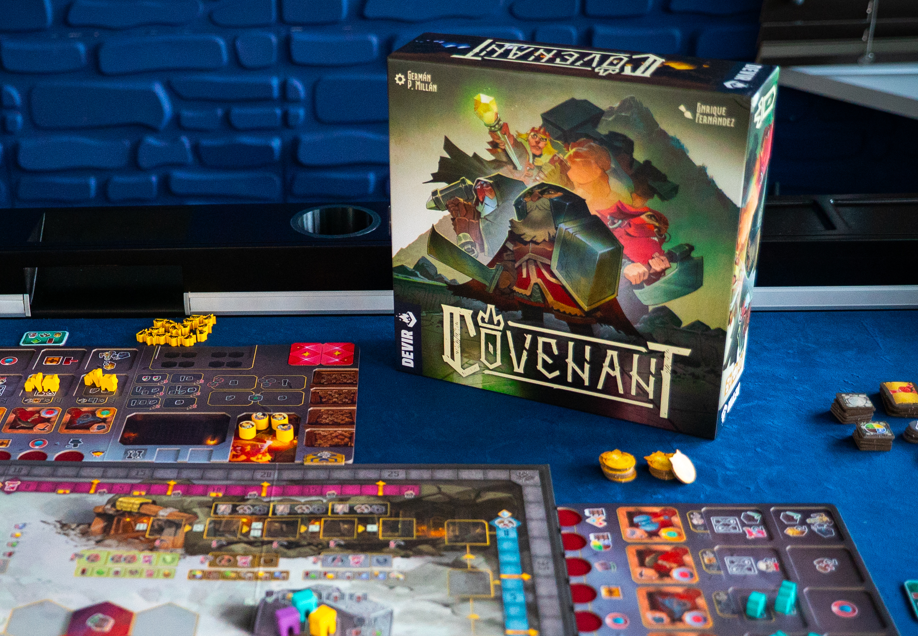
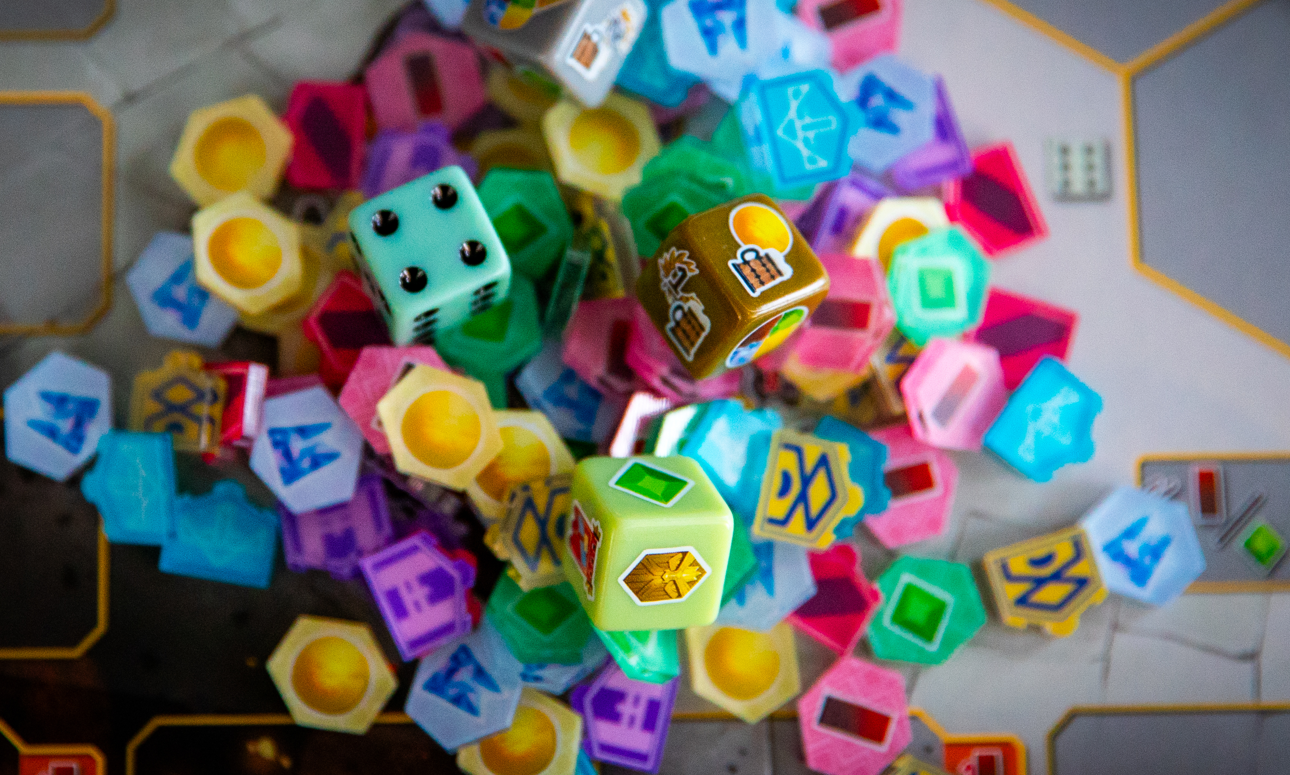
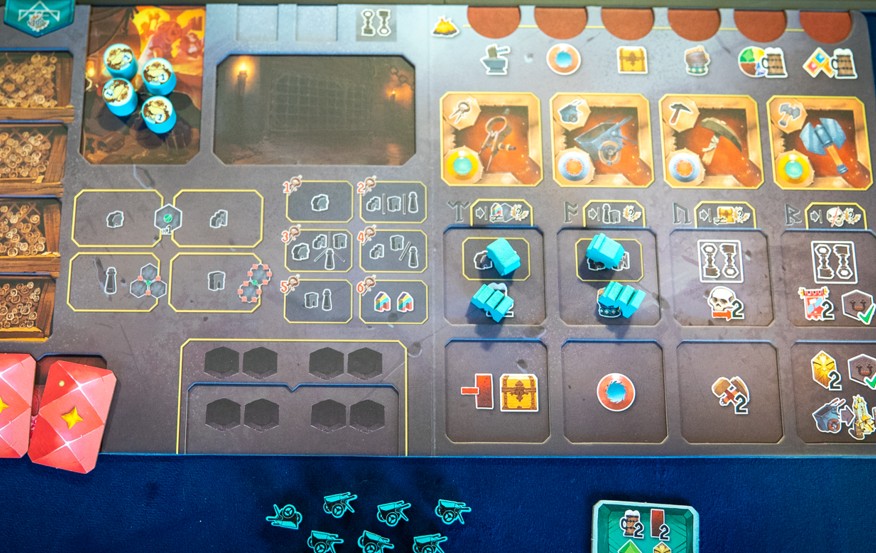
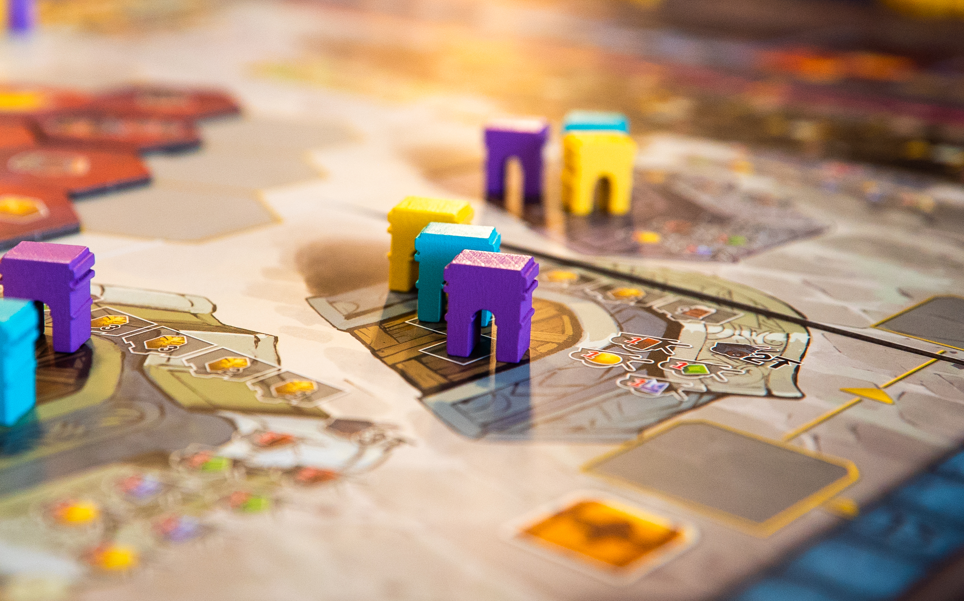
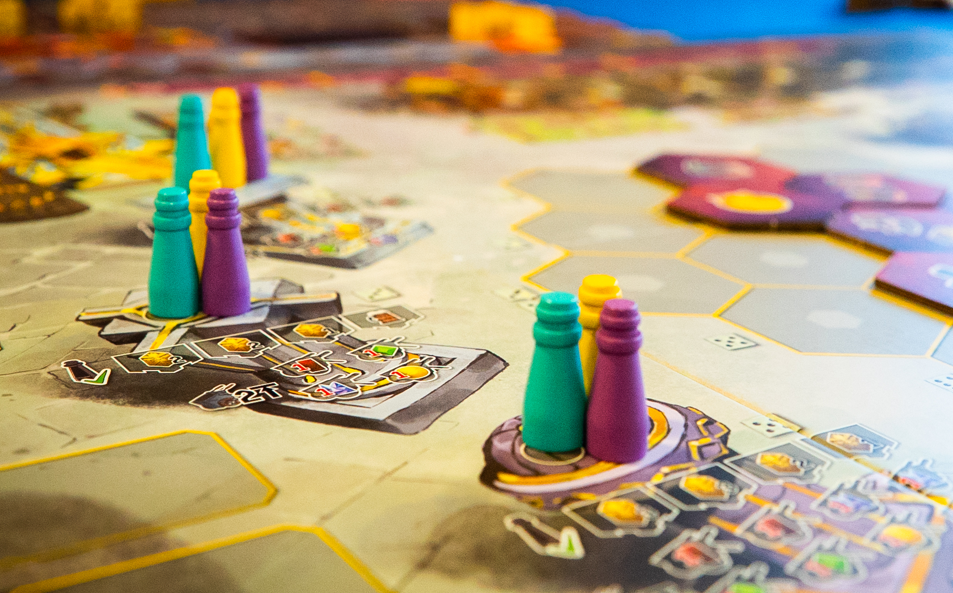
From the very first prototype, you could already see the three progress tracks players could develop, the mountain to explore and build upon, the enemies plaguing it, the three eras of play, and—most importantly—the forge of tools and gems.
All these elements evolved and improved with testing. But I’d like to pause to mention one idea that was ultimately cut: trade with the elves. Tolkien’s books explore a fascinating relationship between elves and dwarves—an idea I find very appealing, especially the friendship between Gimli and Legolas. So I tried to bring something similar into Covenant.
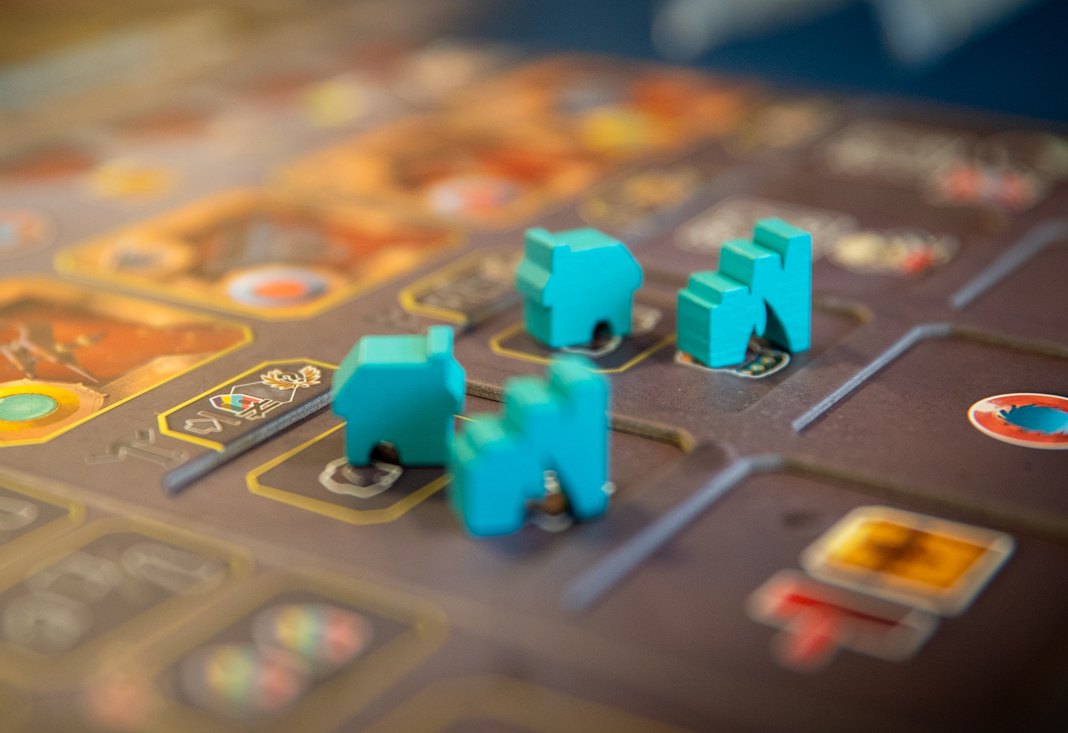
The concept was simple: the minerals and gems mined by the dwarves would create a trade relationship with nearby elven cities. Players could use their resources not only to forge tools but also to trade with the elves. At that stage, the board featured a network of paths connecting the mountain to various elven settlements.
On paper, it sounded great—and I can assure you, it was very hard to let go of it. That mechanic stayed in the prototype for a long time because I refused to remove it. But once again, game design proved that it’s not about what the designer wants—it’s about what the game needs. As strange as it sounds, sometimes it feels like the prototype itself is speaking to you, and what it tells you is often the opposite of what you think.
Looking back, it makes perfect sense that we scrapped it. The elven trade pulled the player’s attention away from the central focus. It created a tug-of-war against the main premise: 80% of the game was about reclaiming the mountain, and 20% was about something else. Players felt it was fun but forced—it never truly blended with the rest of the design.
This is just one example of the many decisions designers face during development. Seeing the final version of the board, I feel everything is now perfectly in harmony with the central goal: reclaiming the mountain.
The Dwarves’ Covenant
I don’t remember the exact moment, but at some point David told me that the chance to publish the game under The Lord of the Rings license had fallen through—a possibility we were aware of from the start. I admit I felt a bit disappointed at first, but I think it was ultimately for the best, especially considering how many licensed games are being released nowadays.
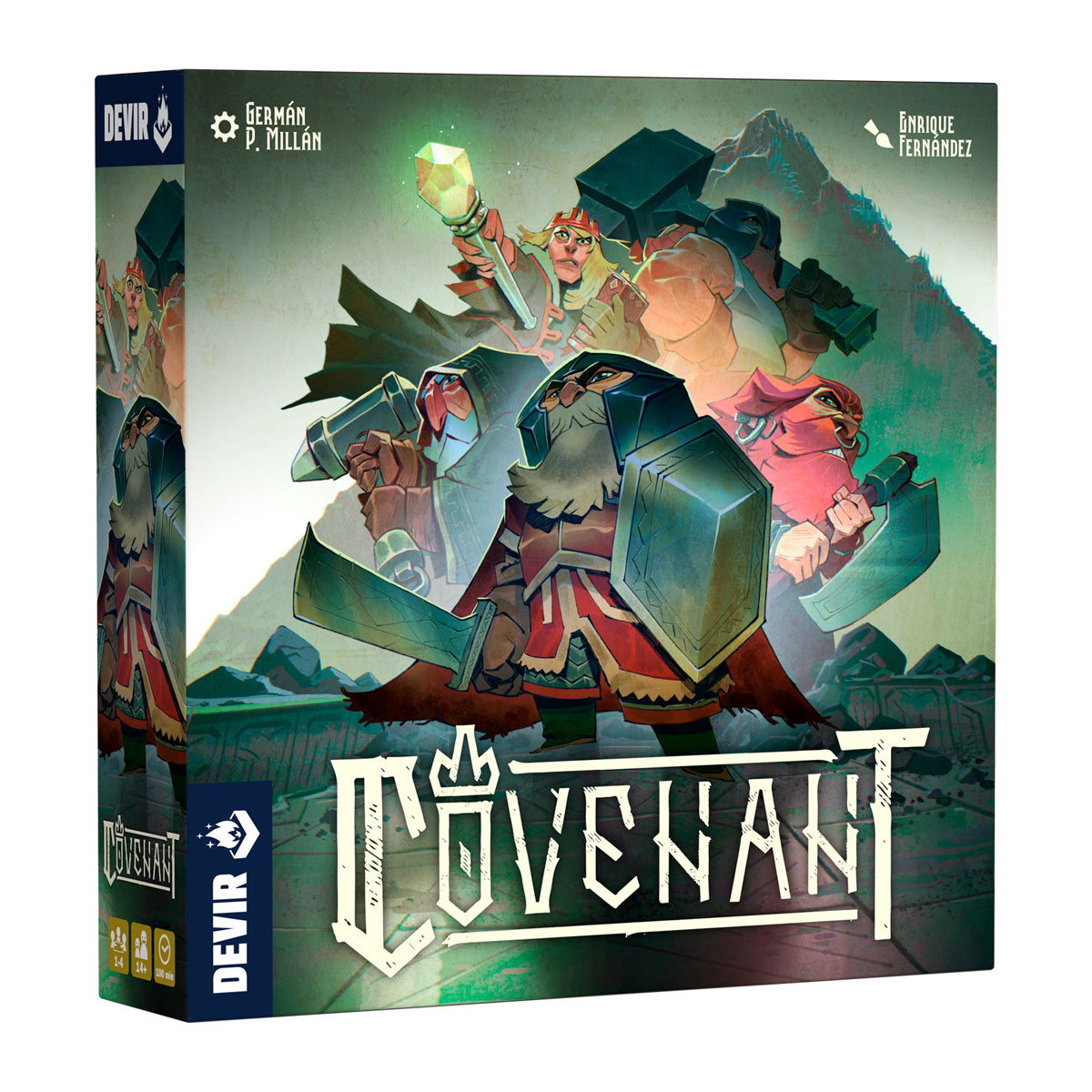
It’s not difficult to adapt a medieval fantasy setting thematically, and David found an incredible illustrator to give the game its own unique identity: Enrique Fernández. The dwarves had signed a pact to reclaim their ancestral home—and thus, Covenant found its name.
With that established, the game’s development solidified. All that remained was to complete its final refinement…
…Gems and Tools
Earlier I mentioned how smoothly Covenant’s development went—but I skipped over one notorious challenge: the gems.
In Covenant, players perform actions using tools. If you equip your dwarf with a pickaxe, they’ll perform an excavation. But each tool also has a slot where you can set a gem (called a “setting”), which adds an extra action to the tool. So, if you give a dwarf a gem-encrusted pickaxe, they’ll perform an excavation plus the extra effect of the gem.
It sounds amazing on paper—but mechanically, it was a nightmare. Not all action combinations worked well. Mixing tool actions with gem effects created redundancies and imbalances.
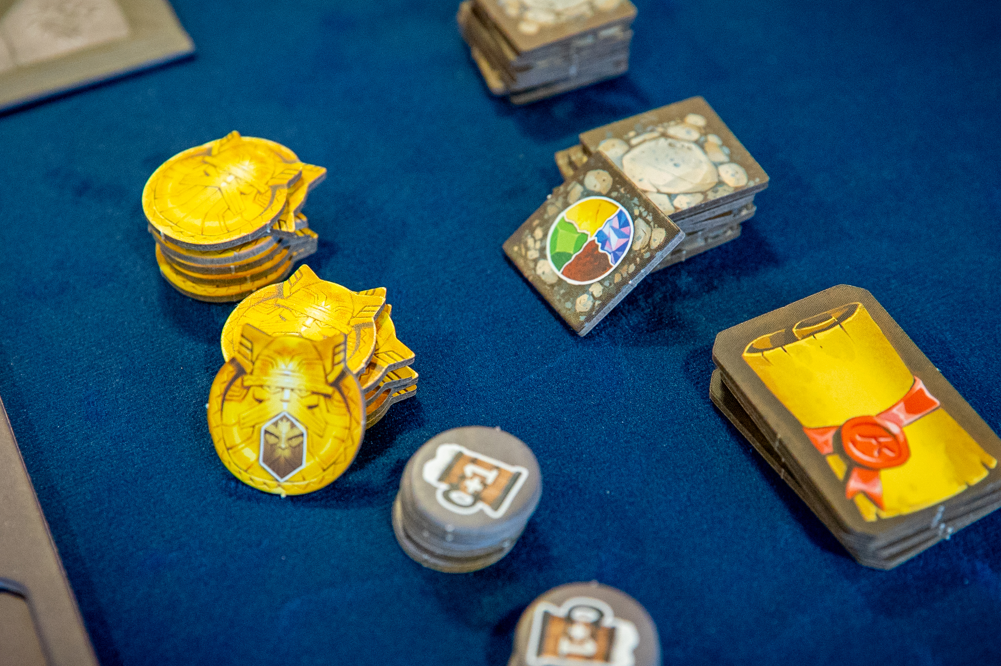
Everything ran smoothly in tests—until a player attached a gem that produced a dangerous combination. And there were many possible combinations—far more than what ended up in the final version.
The gems became a wild horse, hard to tame. A single combination could break the balance of the entire system. It took many sessions to determine which actions could appear on gems and which couldn’t. It was painful to remove some really fun effects because they disrupted the game’s balance. In the end, we divided the gems into two types to ensure equilibrium and variety within the tools-and-gems system.
The lesson here: knowing where to place an action or effect—and where not to—is crucial. It can make the difference between a good design and a mediocre one.
Speak, Friend, and Enter
And that brings this brief design diary for Covenant to an end. I wish I had more to share! I hope you’ll one day enjoy reclaiming the mountain in Covenant—you’ll have only 12 turns to achieve that feat!
I want to thank the Devir team for the opportunity to publish another game together—especially David Esbrí for being a magnanimous clan leader, Enrique Fernández for his mastery with the brush, and Samu and Diego, whose rulers and set squares organized every corner of the mountain.
And finally, if you’ve made it this far—thank you, dear reader and gamer. Without you, we wouldn’t be making these games.