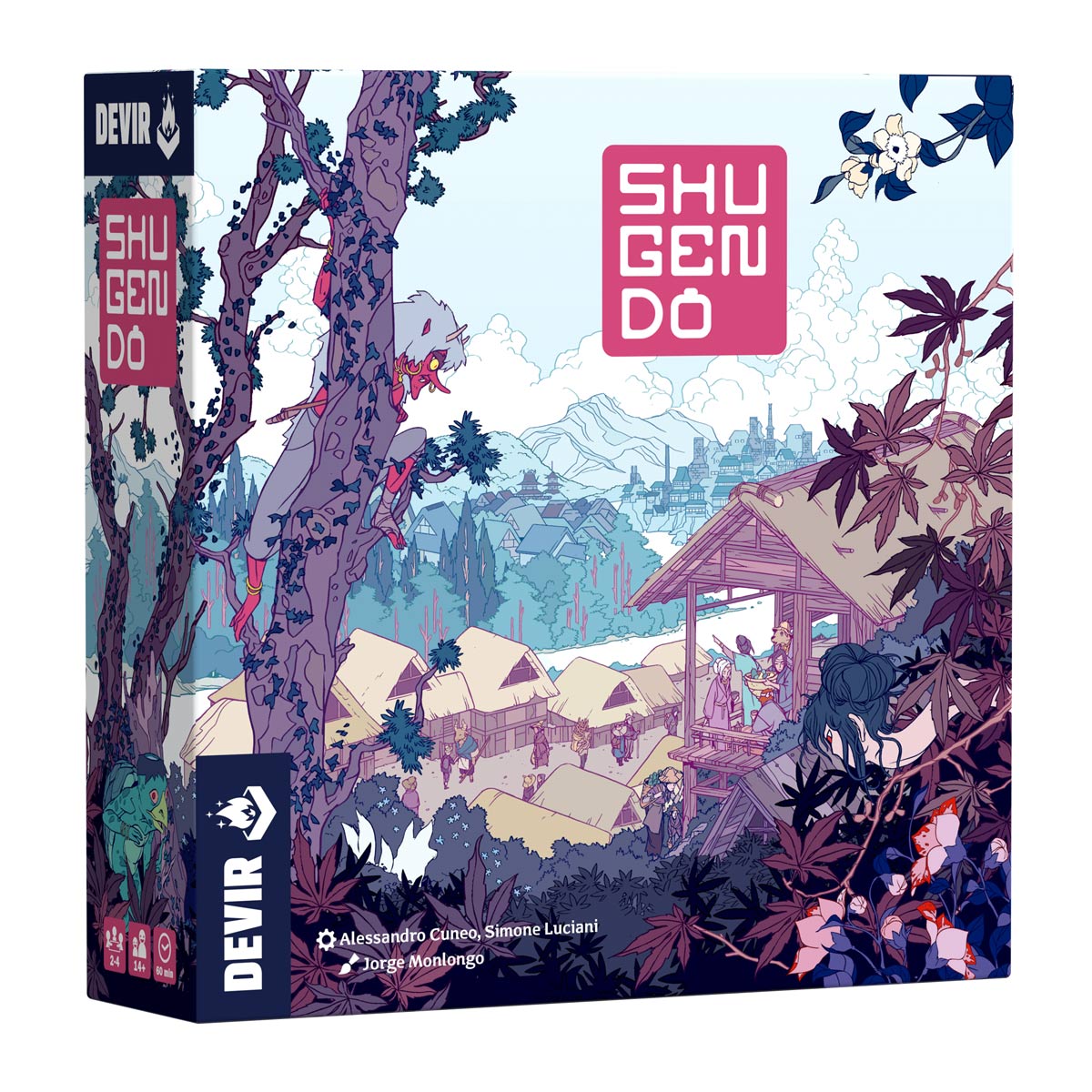
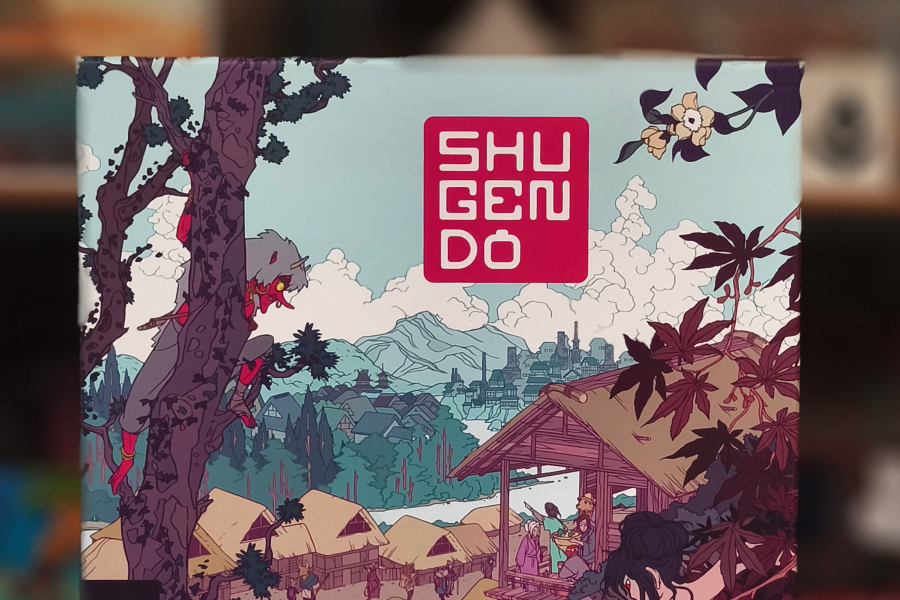
Shugendo: harmony and development in the heart of the forest
Long before tales were carved into stone or set down in ink on parchment, the forest lands whispered their own stories—tales of harmony, balance, and the fragile understanding between humanity and ancestral spirits. In those distant days, small communities lived near bamboo groves and springs, revering an untamed nature protected by the elusive Yōkai.
Yet, as time passed, curiosity gave way to ambition; farms grew into villages, and footpaths turned into roads. Though this expansion was not born of malice, it stirred ancient forces, prompting the Yōkai to respond with subtle mischief—a reminder that the land was never truly empty.
Designed by Alessandro Cuneo and Simone Luciani (co-designer of titles such as Barrage, Grand Austria Hotel, Darwin’s Journey, and Tzolk’in) and illustrated by Jorge Monlongo, Shugendo can be played by two to four players, aged 14 and up, in sessions lasting approximately 60 minutes. Set within the Kemushi saga —a thematic universe that links games like Bitoku, Daitoshi, and Bamboo— this title challenges players to achieve the highest score over a series of rounds, during which they will play cards and develop their own personal player boards using various tiles.
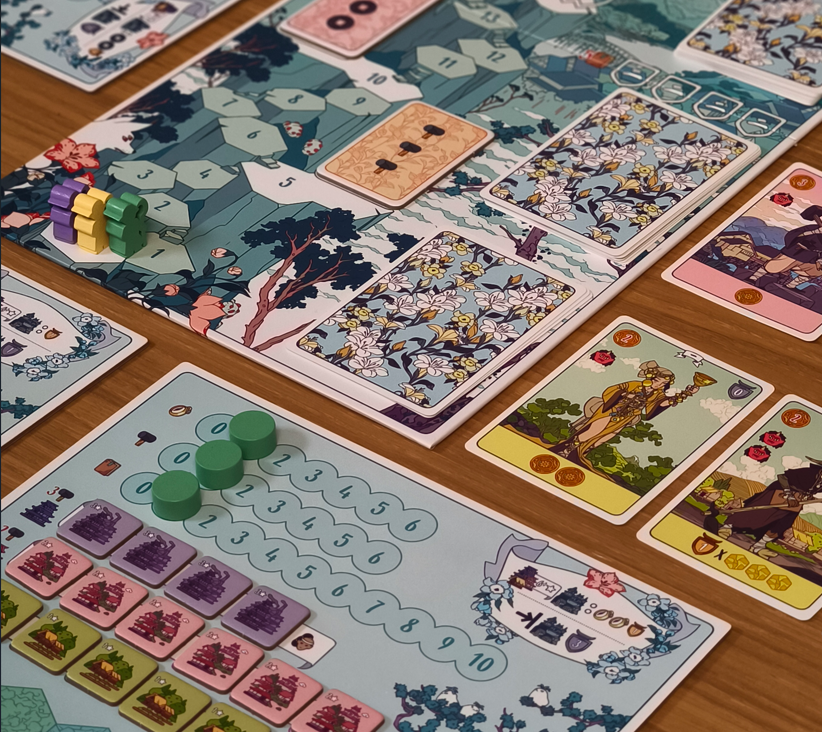
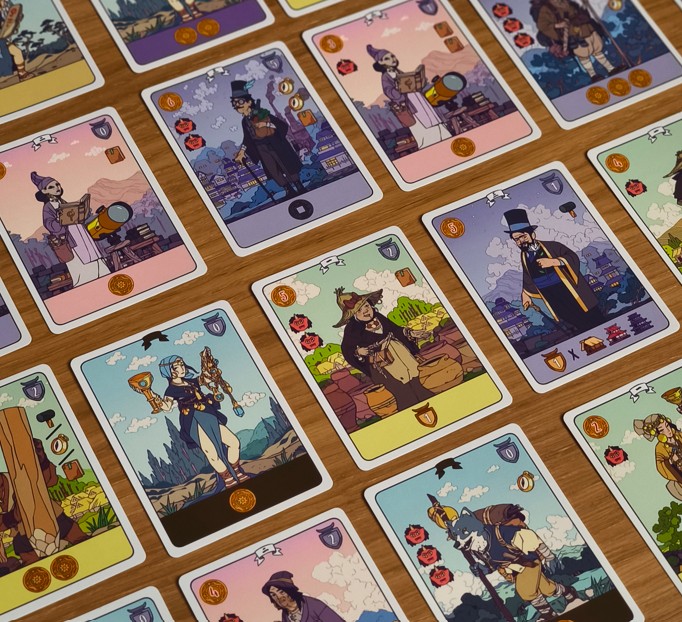
In terms of production, the game stands out for the great variety and detail of its components. In addition to the central board, there are four double-sided player boards featuring hexagonal spaces that represent different types of terrain. The game also includes community tiles—representing farms, villages, and cities—as well as prefecture tiles, coins, and pilgrim tokens. The experience is rounded out by fifty-two starting cards, ninety settler cards organized by era, and thirteen development tiles.
Mechanically, Shugendo offers a dynamic system that combines deck-building, a degree of "push-your-luck" gameplay, and territorial development through tile placement, all structured into three phases per round. During the revelation phase, players draw cards from their deck one by one to accumulate resources. However, if seven or more Yōkai icons are revealed, the player falls victim to the mischief of these spirits and must choose to carry out either the action phase or the recruitment phase—but not both. To avoid this penalty, players can use pilgrim tokens to appease the spirits and ignore the negative icons on a card. If a player decides to stop before accumulating too many Yōkai, they may proceed with both the action and recruitment phases.
Balanced development
During the action phase, players use the compasses they have previously acquired to explore new terrain tiles on their personal boards. Hammers are used to build or upgrade settlements, while books allow players to advance to the next era, granting access to better cards. Furthermore, connecting settlements leads to the founding of prefectures, which provide valuable victory points. Finally, in the recruitment phase, coins are spent to acquire new settlers, who replace older cards and strengthen the player’s deck.
The game ends when a player reaches fifteen victory points, constructs their third prefecture, or advances to the fifth era. Increasing your influence, adapting your strategy, and attracting the right settlers to earn victory points will be key to securing the win. In Shugendo, progress is possible, but harmony is never guaranteed.